The EU Honey Directive 2026
The new EU Honey Directive 2026. How labels, origin rules, and the fight against counterfeiting are changing.
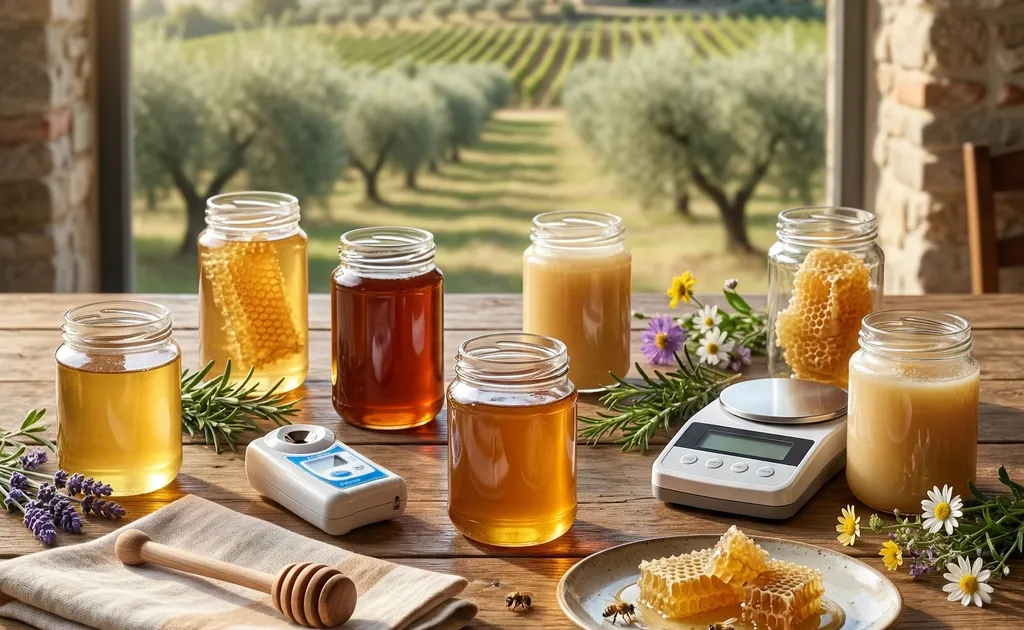
The EU Honey Directive 2026: The Dawn of Absolute Transparency
In the sophisticated world of haute gastronomy, luxury always coincides with authenticity. A product of excellence, to rightfully claim such a title, must possess an unequivocal identity card attesting to its origin, its biochemical purity, and the complete absence of alterations. Until the recent past, the global honey market was obscured by lax regulations that permitted the circulation of anonymous, and frequently adulterated, products. With the entry into force of the new EU Honey Directive 2026, the European legislator has finally drawn a definitive line to defend true apiculture, the terroir, and the discerning consumer, transforming transparency into a legal obligation.
The New Regulatory Landscape of 2026
The regulatory update represents an epochal watershed for the premium agri-food sector. It is a surgical operation aimed at excising the grey areas of previous legislation, elevating honey from a standardised consumer good to a genuine Grand Cru, traceable in every single drop.
Why did the European Union reform the Honey Directive in 2026?
The European Union reformed the Honey Directive in 2026 to combat burgeoning food fraud, imposing total transparency regarding geographical origin and introducing advanced analytical methods to detect adulteration with sugar syrups, thereby safeguarding the product’s authenticity and local apiculture.
Delving into the reasons behind this historic intervention, it is essential to understand that honey is considered, on a global scale, one of the foodstuffs most susceptible to sophistication. Investigations conducted by the European Anti-Fraud Office (OLAF) in the years leading up to 2026 revealed alarming data: an exceptionally high percentage of honey blends imported into the European market were suspect, failing to comply with the strict European biochemical definition or patently diluted with foreign substances. The reform became imperative to protect the continent’s biodiversity, champion the meticulous work of beekeepers who operate with respect for the insect, and provide sommeliers, chefs, and tasters with the absolute guarantee of handling a 100% pure matrix.
The threat of “fake honey” and adulterated honeys on the global market
In the technical jargon of food quality, the concept of “fake honey” does not merely refer to a low-quality product, but rather to structured chemical fraud. The most common adulterations occur through the covert addition of low-cost sugar syrups (derived from maize, rice, or beet), which mimic the density and sweetness of nectar, drastically slashing production costs.
This practice obliterates the sensory architecture of the honey. An adulterated product is biologically dead:
- Absence of Enzymes: Artificial syrups do not contain diastase, invertase, or glucose oxidase—fundamental enzymes that bees secrete and add to the nectar during the complex foraging and dehydration phase within the hive.
- Aromatic Void: The fraudulent blend is entirely devoid of the volatile organic compounds (VOCs) typical of floral blooms, offering the palate a singular, cloying sensation of flat sucrose, lightyears away from the elegance of a raw artisanal honey.
- Absence of Botanical Identity: The lack of a natural pollen profile makes it impossible to geographically map the batch, severing any link with the native pedoclimate.
Labelling and Origin: The End of Opacity
The fundamental pillar of the 2026 Directive is the revolution imposed upon label wording, putting an end to decades of legal ambiguity.
Farewell to the term “Blend of EU and non-EU honeys”
For years, the industry was able to conceal the true provenance of its batches behind generic, legally unassailable formulas, such as the notorious phrase “blend of EU and non-EU honeys”. This wording allowed a single drop of European honey to be mixed with quintals of imported product of dubious nature and traceability, packaging the entirety in a reassuring-looking jar. As of 2026, this terminology has been definitively abolished, deemed misleading and detrimental to the dignity of the primary sector.
What are the new labelling obligations for honey blends from 2026?
From 2026 onwards, labels on blends must obligatorily indicate all the countries of origin of the honey, listed in descending order of weight, accompanied by their exact respective percentages. This regulation definitively eliminates generic wording, guaranteeing the total geographical traceability of the product.
This extraordinary regulatory victory provides the premium consumer and hospitality professionals with a formidable selection tool. Reading a label today means being able to analyse an unequivocal identity document. Every single batch, even if blended by a massive industrial packer, must clearly display its registry. If a jar contains nectar originating from nations where controls on phytopharmaceuticals or the use of industrial syrups are less rigorous than in Europe, the purchaser is immediately informed thanks to the percentages printed in plain sight on the glass.
What is the impact of the new directive on large industries and artisanal beekeepers?
The legislation penalises large industries, compelling them to declare the use of cheap, foreign-imported honeys, whilst offering a decisive strategic advantage to local artisanal beekeepers, who can legally champion their purity, short-chain provenance, and the identity of their terroir.
While packaging behemoths must entirely overhaul their supply chains and navigate vastly more complex labelling logistics, the artisanal producer finally finds themselves in a position of distinct intellectual and commercial advantage. For those producing high-end monofloral honeys from Lazio, such as Chestnut from the Monti Cimini or Eucalyptus from the Pontine Plain, the “100% local origin” label becomes an impenetrable protective shield—a crest that certifies excellence, justifies premium pricing in the luxury market, and rewards the environmental sustainability of stationary or short-range nomadic apiculture.
Scientific Controls and the Fight Against Sophistication
The Directive does not limit itself to imposing new typographical rules; it arms European laboratories with cutting-edge protocols to detect the most insidious counterfeits.
New analytical methods to detect added sugar syrups
Modern food frauds have become exquisitely sophisticated, driving adulterators to utilise syrups formulated to perfectly mimic the natural ratio between fructose and glucose. Old routine checks were incapable of unmasking these silent additions.
With the implementation of the new provisions, European customs and health authorities have adopted frontier technologies:
- Nuclear Magnetic Resonance (NMR): This instrument traces the spectroscopic profile of the entire jar in mere minutes, cross-referencing it against a global database of pure honeys. Any molecular alteration, no matter how minute, is immediately highlighted.
- Isotope Ratio Mass Spectrometry (IRMS): This permits the distinction between sugars derived from plants with a C3 photosynthetic cycle (flowering plants, legitimate nectar) and sugars derived from C4 plants (such as maize or sugar cane, used for fake industrial honeys).
Harmonisation of control laboratories at a European level
Until recently, the disparity in analytical protocols across various Member States created dangerous loopholes within the single market. The 2026 Directive established a European Union Reference Centre for honey, tasked with harmonising analytical methods, certifying laboratories, and creating a shared infrastructure for the interpretation of analytical data. This defensive network ensures that a batch rejected in Rotterdam cannot be slipped into the market via Southern European ports.
Blockchain traceability and digital systems for authenticity
In tandem with chemical controls, the Directive incentivises the use of digital traceability technologies. Premium producers are adopting systems based on blockchain technology, associating an inviolable QR code with every single batch. By scanning the code, the taster can access the results of the melissopalynological analysis, verify the HMF Index at the time of packaging, consult the GPS positioning of the apiary, and even review the temperatures recorded in the extraction room. Authenticity thus becomes an immersive and incorruptible experience.
The Reaffirmed Definition of “Honey”
The European text reiterates, protects, and elevates to dogma a historical and philosophical definition that constitutes the very core of haute gastronomy.
No additions, no subtractions: The golden rule confirmed
European legislation, in its elegant simplicity, decrees that nothing may be added to honey, nor may any of its constituent elements be subtracted. Honey is not manufactured; it is stewarded.
This directive fiercely protects the concept of “raw honey”. Human intervention must be limited to cold mechanical extraction. Every thermal stress, every manipulation designed to alter the profile to appease mass-market tastes, distances the product from its legal and gastronomic identity. Purity is the sole permissible parameter: the obsessive respect for the natural moisture determined by the bees beneath the wax capping, and the safeguarding of the antioxidant polyphenols specific to each unique floral bloom.
The debate on ultra-filtered honey and removed pollens
One of the most fiercely debated fronts during the drafting of the new legislation concerned micro-filtration and industrial ultra-filtration—processes deployed on a massive scale to strip every solid particle from the honey, rendering it perpetually liquid and visually brilliant on the shelf.
The Directive clarified that pollen is an intrinsic and inalienable component of natural honey, not a foreign body. Removing pollens via ultra-high-pressure membranes to mask the botanical and geographical origin of the nectar is a violation of the product’s essence. The suspension of microscopic pollen grains is nature’s holographic signature; its presence certifies territoriality and allows for microscopic examination to produce the melissopalynological certificate—the ultimate sensory passport for any apiary Grand Cru.
What Changes for the Gourmet Honey Consumer
The introduction of the EU Honey Directive 2026 marks the end of the era of confusion and the dawn of an age of tasting awareness. The premium buyer becomes an active participant in quality control.
How to read the new labels from 2026 onwards
The sommelier, the chef, or the sophisticated enthusiast, when faced with an updated label, must focus on three key elements to validate the product:
- Exact Geographical Origin: Ensure the absence of multi-country blends, or critically evaluate the percentages if present. A honey of excellence claims a single terroir, often limited not to an entire nation, but to a highly specific area (e.g., “Chestnut Honey from the Monti Cimini - Italy”).
- Botanical Denomination: The specification of the dominant plant (monofloral) or the floral complexity (local Wildflower), certified by laboratory testing.
- Extraction Method: The search for wording such as “cold-extracted”, “unpasteurised”, or “raw honey”, which guarantee the preservation of the enzymatic and aromatic architecture.
Championing Terroir and local micro-productions (Lazio)
This regulatory reform acts as a formidable value multiplier for territorial excellences. Liberated from the unfair competition of adulterated, artificially cheap products, the micro-productions of Lazio can finally emerge and articulate their exclusivity.
The Wildflower honey of the Roman Campagna is no longer forced to compete with globalised blends; it is recognised as a botanical work of art, a direct expression of the Mediterranean scrub and volcanic soils. The elegant notes, the complex crystallisation kinetics governed by the local ratio between glucose and fructose, and the savoury nuance derived from the territory’s mineral salts, become narrative focal points within Michelin-starred restaurants. The Lazio beekeeper thus becomes the certified custodian of a precious and irreplaceable resource.
Conclusion: A victory for transparency and ethical apiculture
The EU Honey Directive 2026 is not a mere bureaucratic adjustment, but a genuine declaration of respect for nature and the culture of taste. It has swept away anonymity and artifice, returning the central figure of the bee, the specificity of the territory, and the wisdom of artisanal apiculture to the heart of the discourse.
For the luxury hospitality sector and the conscious consumer, this law represents the ultimate guarantee. To savour a raw honey today means to taste a legally inviolable product, one that offers the palate—in all its marvellous tactile and olfactory complexity—the liquid, pristine truth of the European terroir.