Miele Naturale: The Guide to Artisanal Honey in Rome and Lazio
Learn to understand and appreciate artisanal honey. From the aroma wheel to the complex processes of crystallization, we explore the rich biodiversity just outside Rome and the botanical characteristics of the Lazio terroir together.
Our Guides
The Culture and Science of Honey
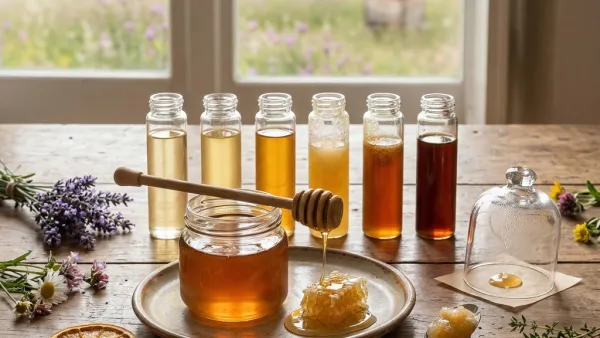

The Art of Tasting: A Guide to Sensory Analysis
Learn the technical protocol to evaluate the colour, aroma, and texture of artisanal Lazio honey.

Science and Purity: The Biochemistry of Raw Honey
From thermolabile enzymes to the HMF index: discover why physical integrity is synonymous with superior quality.
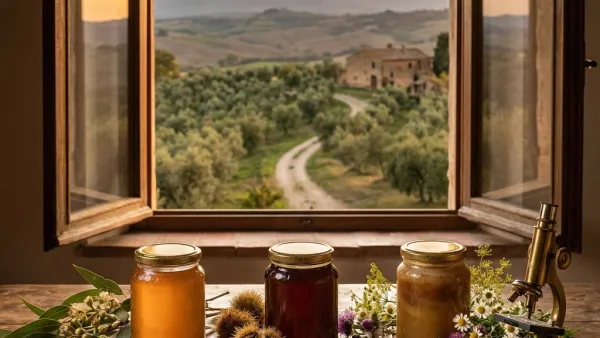
Origins and Flowers: Discovering the Lazio Terroir
A journey through spontaneous blooms and the unique microclimate that define the identity of Lazio honey.
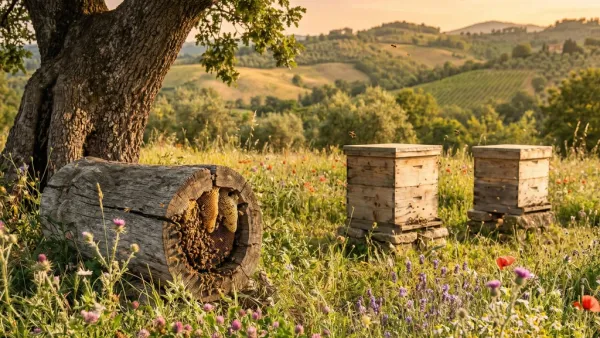
Biodiversity and Ethics: The Value of Apiculture
Why protecting bees means safeguarding the territory and ensuring a future for our agriculture.
Our Mission in Rome and Lazio
Local Beekeeping
Content grounded in technical and scientific evidence, alongside current regulations, to guide you towards conscious consumption, highlighting the short supply chain and the deep beekeeping vocation of the Rome and Lazio territory.
Natural Excellence Network

From Shell Codes to the Perfect Recipe
Same farm · From the Roman countryside · Same artisanal care
Latest Articles on Lazio Honey
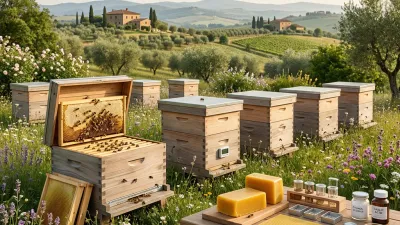
Sustainability in Apiculture: Ethics and Welfare
Ethical beekeeping practices in Lazio. How sustainability, respect for natural cycles, and the 2026 directives protect the welfare of bees.
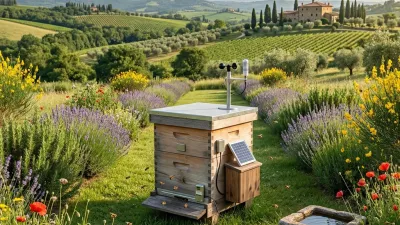
Bees as Bioindicators in the Lazio Region
How bees act as living environmental sensors for air quality and biodiversity in Lazio.
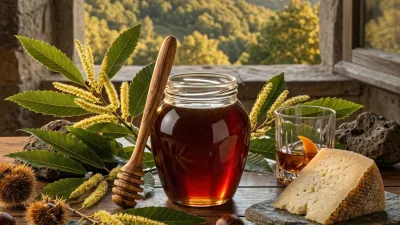
Chestnut Honey from the Monti Cimini
Chestnut honey from the Monti Cimini. Organoleptic profile, botany, and characteristics of this masterpiece of the Lazio terroir.
Frequently Asked Questions
Aromatic persistence (or the finish) is the temporal duration of the olfactory-gustatory sensations that remain in the mouth after swallowing the honey.
- Complexity of Terroir: High-quality artisanal honeys display a long and complex persistence. Following the initial perception of sweetness, secondary notes (balsamic, animal, floral) emerge, which can last for several minutes.
- The Technical Test: It is evaluated by exhaling through the nose with the mouth closed immediately after swallowing (retronasal route), measuring in seconds the clarity and intensity of the aromatic memory.
The forager bee (the colony’s explorer) completes thousands of flights daily within a radius of approximately 3km, collecting samples of nectar, pollen, water, and resins, thus becoming a sophisticated instrument for biomonitoring.
- Pollution Detectors: By conducting laboratory analysis on the beeswax, pollen, or the bees themselves, it is possible to map with millimetric precision the presence of heavy metals (lead, cadmium), particulate matter, and agrochemicals within the surrounding ecosystem.
- Sensitive Bioindicators: The sudden collapse of a honeybee colony in a specific area is often the first, dramatic alarm bell signalling active environmental poisoning.
Crystallisation is a perfectly natural physical process and represents the best certification of honey that is intact and has not been industrially treated:
- Glucose/Fructose Ratio: The richer a honey is in glucose, the faster it will crystallise; this is a natural saturation of sugars.
- Absence of Pasteurisation: Honey that remains permanently liquid (with the exceptions of Acacia, Chestnut, and Honeydew) has likely undergone pasteurisation, a thermal process that destroys enzymes and vitamins for purely aesthetic purposes.
- Aromatic Integrity: Crystallised honey keeps all organoleptic profiles intact. To return it to a liquid state without damage, simply warm it in a bain-marie without ever exceeding 40°C, the threshold beyond which the enzymatic heritage irreversibly declines.
They represent two philosophically opposed expressions of our territory: the clarity of detail versus the richness of the ensemble.
- Sulla Honey (Monofloral): Derived from fields of Hedysarum coronarium, typical of Central Italy. It is a “clear and legible” honey, nearly white when crystallised, with delicate and fresh vegetable notes. It represents a single botanical voice.
- Wildflower (Millefiori) from the Roman Countryside: This is a “panoramic photograph” of an entire season. It is never identical to itself, as the proportion of nectars (thistles, clovers, brambles, plum trees) changes annually based on rainfall and climate, offering an unrepeatable complexity.