Sustainability in Apiculture: Ethics and Welfare
Ethical beekeeping practices in Lazio. How sustainability, respect for natural cycles, and the 2026 directives protect the welfare of bees.
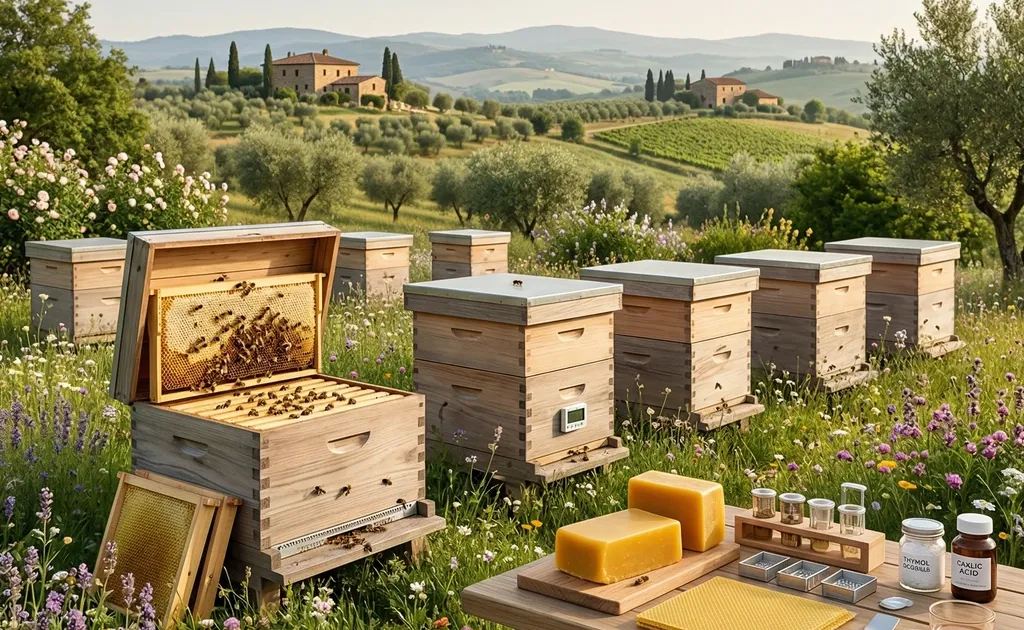
The Ethics of the Hive: Stewarding the Biochemistry of Terroir
In the restricted and elite circle of haute gastronomy, luxury cannot be separated from irreproachable ethical conduct. An apiary Grand Cru, with its exceptional aromatic complexity and the tactile perfection of its crystallisation, is never the fruit of animal exploitation; rather, it is the collateral masterpiece of an ecosystem in perfect equilibrium. To guarantee a product with superior organoleptic and biochemical characteristics, the 2026 directives and Lazio’s premium apiculture have elevated insect welfare to a fundamental parameter of total quality.
Beyond Organic: The Concept of Ethical Apiculture
Settling for the organic certification logo is now anachronistic for haute cuisine. Ethical apiculture transcends bureaucratic constraints to embrace a philosophy of unconditional respect for the biology of the insect.
The difference between regulatory compliance and genuine animal welfare
The standard organic protocol focuses primarily on the prohibition of synthetic chemical molecules (particularly phytopharmaceuticals and pesticides). Ethical apiculture, whilst incorporating these bans, goes further, intervening in agronomic management. An ethical beekeeper does not manipulate the colony to maximise production yields, but operates as a silent custodian. Their primary objective is not to extract the greatest possible quantity of honey, but to ensure that the colony reaches the end of the season with maximum metabolic and enzymatic vigour. Indeed, only a healthy, unstressed colony is capable of secreting invertase and diastase in quantities sufficient to elevate a simple nectar to a gastronomic masterpiece.
The hive as a superorganism: Respecting the colony’s equilibrium
From a biological and ethological perspective, the individual Apis mellifera possesses no independent identity. The colony must be understood as a “superorganism”—a complex biological entity where tens of thousands of individuals act like the cells of a single body, coordinated by a sophisticated architecture of pheromones. Every invasive intervention by the beekeeper (overly frequent inspections that dissipate heat, forced splitting of colonies) represents a trauma for this superorganism. It compels the colony to expend vital energy to restore the thermodynamic and olfactory equilibrium of its home, to the detriment of processing the volatile organic compounds (VOCs) of the nectar.
Intensive apiculture vs. Precision apiculture in Lazio
The Lazio territory, with its alternation of ultra-high-density urban areas and oases of pristine nature, has fostered the development of two antithetical philosophies. Industry exploits apiaries to achieve standardised production. Precision apiculture, conversely, selects micro-areas (from the volcanic reliefs of the Monti Lucretili to the estates of the Roman Campagna) in which to position an extremely limited number of hives. This ensures that the foraging load never exhausts the floral resources of the local pedoclimate, guaranteeing the conservation of endemic biodiversity and permitting the genesis of Wildflower (Millefiori) honeys of unapproachable aromatic density.
The Respectful Management of Natural Cycles
Minimal interference is the dogma of honey haute sommellerie. Respecting the circadian and annual rhythms of the colony is the only way to obtain a raw product that is the pure expression of nature.
Why is it fundamental to leave natural honey stores during wintering instead of using artificial syrups?
Leaving natural honey stores guarantees the colony a diet perfectly balanced in carbohydrates, enzymes, and microelements. This aligns with the insect’s ethology, prevents metabolic stress, and eliminates any risk of contaminating the spring harvest with synthetic sugars.
In industrial practice, the beekeeper strips the hive of all its honey at the end of summer, replacing it with low-cost inverted sugar syrups to feed the bees during the winter cluster. In elite apiculture, this practice is a taboo. Withdrawing natural nourishment, rich in gluconic acid and pollen proteins, debilitates the colony’s defences. An ethical beekeeper accepts a drastic reduction in their immediate profit, leaving abundant combs of capped honey at the exclusive disposal of the insect to survive the cold season in total self-sufficiency.
Natural swarming: Yielding to the reproductive instinct
Swarming is the natural process through which a bee colony reproduces by dividing in two. The industry violently represses this instinct, as the loss of half the foraging population in the height of spring halves the honey harvest. The ethical beekeeper, however, accommodates and guides this vital impulse. Permitting the spontaneous renewal of the queen generates colonies endowed with superior resilience, genetically fortified and capable of autonomously resisting environmental stresses.
Reducing stress from exasperated nomadism
Nomadic beekeeping, which involves moving hives at night to chase blooms (such as the transfer to Chestnut woods in June), is an ancient practice. However, exasperated nomadism—forcing bees to travel hundreds of kilometres multiple times a season—subjects them to devastating vibrations, disorientation, and prolonged flight restrictions. The producers of the grand Lazio Crus favour “short-range” nomadism, moving the hives in an extremely targeted and respectful manner, to preserve the integrity of the superorganism.
Sustainable Control of Parasites (Focus on Varroa Destructor)
The primary scourge of modern apiculture is Varroa destructor, a parasitic mite that debilitates bees and transmits severe viral diseases. The manner in which this threat is managed defines a producer’s ethics and the absolute purity of the final product.
The impact of synthetic chemical treatments on wax and honey
The use of synthetic chemical acaricides (amitraz, fluvalinate) is widespread in conventional apiculture. These compounds are highly lipophilic, meaning they inexorably bind and bioaccumulate within the lipid fraction of beeswax. Due to the high internal temperatures of the hive, these toxic molecules risk migrating via osmosis from the contaminated wax into the supersaturated nectar, irreparably compromising the biochemical matrix of the honey and reducing its gastronomic value to zero.
How do biomechanical methods work for the containment of Varroa destructor in organic apiculture?
Biomechanical methods involve the temporary caging of the queen or the removal of drone brood. By physically interrupting the mite’s reproductive cycle, the beekeeper suppresses the infestation without employing synthetic molecules, guaranteeing the absolute purity of the waxes and the absence of residues in the honey.
Beyond these virtuous technical manipulations, EU legislation and the most rigorous organic standards mandate a zero-impact organic arsenal.
Organic treatments: Zero-residue oxalic acid and thymol
Grand master beekeepers exclusively utilise organic acids naturally present in nature.
- Oxalic Acid: Administered in the absence of brood (usually during the winter broodless period), it eliminates mites upon contact without leaving any persistent residue in the combs and keeping the HMF Index unaltered.
- Thymol: A phenol extracted from thyme, used in late summer. Although it has a pungent odour that fades naturally before the new harvest season, its vegetal origin guarantees the chemical protection of the nest.
The Circular Economy of Beeswax
Honey cannot be excellent if the container in which it matures is not perfect. Wax combs are the womb, the pantry, and the load-bearing structure of the superorganism.
The ban on using wax adulterated with paraffin
The scandal of waxes adulterated with paraffin and petrochemical-derived stearin severely shook the conventional market. Using contaminated foundation sheets to cut management costs alters the mechanical properties of the comb (which can collapse at 38°C) and irretrievably pollutes the purity of the honey. In the gastronomic luxury sector, the use of inert or adulterated material results in immediate expulsion from premium selections.
The closed loop: Exclusive recovery of capping wax
The ethical producer operates within a strictly closed wax loop. They utilise solely their own capping wax (the exceedingly thin, pristine veil of virgin wax freshly secreted by the bees’ wax glands, used to seal mature honey below 18% natural moisture). Following cold extraction, these cappings are melted at low temperatures and pressed into new foundation sheets. This perfect circular economy guarantees the total absence of chemical accumulation and protects the honey’s aromatic matrix.
The importance of comb renewal for colony health
In nature, bees abandon old nests darkened by use. The responsible beekeeper accommodates this natural hygiene by proceeding with a cyclical renewal of at least 30% of the nest combs every year. Dark combs, years old, harbour fungal spores and alter the dimensions of the cells, shrinking the size of the emerging bees and degrading the olfactory components of delicate honeys such as Asphodel or Lazio Clover.
The Social Impact of the Beekeeper on the Territory
Cultivating excellence means assuming territorial responsibility. High-end apiculture is a profession that generates a formidable positive and regenerative impact on the surrounding environment.
Guarding the rural landscape against agricultural abandonment
Maintaining apiaries in the inland areas or the volcanic districts of the Monti Cimini means physically guarding mountainous and hilly territories otherwise exposed to abandonment or intensive agriculture. The ceaseless foraging activity guarantees cross-pollination, preserving Lazio’s endemisms, increasing the yield of spontaneous blooms, and providing hydrogeological stability through the root propagation of the safeguarded botanical species.
Environmental education and final consumer awareness
On Michelin-starred tables, artisanal honey becomes the supreme educational tool. Explaining to a client why that Eucalyptus honey crystallises into a fondant paste, or why Chestnut retains its tannic power without solidifying due to its high fructose content, means elevating the cultural level of consumption. The jar of honey ceases to be a commodity, transforming into the biological manifesto of a protected ecosystem.
The ethics of pricing: Fairly remunerating the labour of safeguarding
Ethical apiculture incurs enormous operational costs: the sacrifice of part of the harvest for winter stores, the use of expensive organic treatments, and cold extraction methods that prolong processing times. Purchasing a honey positioned in the luxury segment means understanding and endorsing this price ethic. The beekeeper’s remuneration covers not merely the food product, but actively finances the safeguarding of the honeybee, the protection of the Lazio environment, and the preservation of an invaluable artisanal knowledge.
Conclusion: Biochemical excellence stems from welfare
Sensory analysis, the rigour of melissopalynological analyses, and the obsession with a zero HMF Index are unattainable goals lacking a profound respect for the producing insect. Ethical apiculture is the only viable path to producing a luxury honey.
Choosing to bring to one’s mouth a Lazio Cru extracted following these rigorous precepts means embracing an absolute gustatory experience—a sensory privilege born not of exploitation, but of a magnificent, silent, and respectful collaboration between human intelligence and the eternal wisdom of the bees.